
Blackjack Hand Result: When Two Players Each Get 21
Blackjack is a well-known card game played online and in land-based venues. Each round can develop in a different way, and one situation that can cause questions is when two players both end up with a total of 21.
This does not happen often, but when it does, it might help to know how the hand is settled and how payouts are determined. Rules can differ depending on the table or game variant, so it could be a good idea to check the information panel in the game you are playing. Read on to learn more.
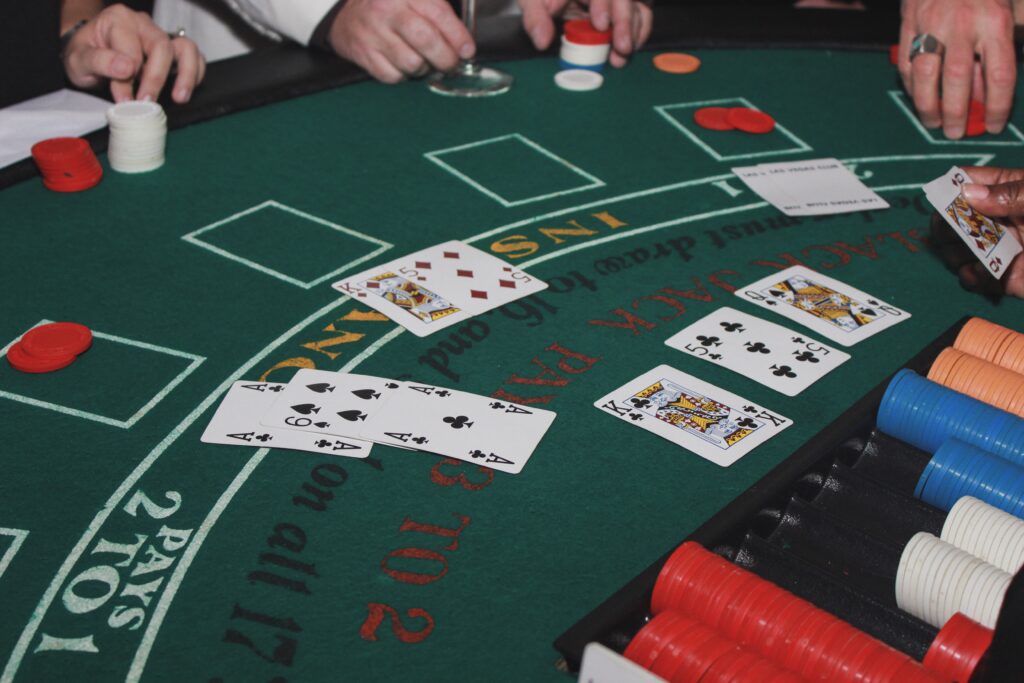
What Happens If Two Players Both Have 21 in Blackjack?
In a standard game, each player’s hand is compared only with the dealer’s hand. Other players’ cards do not affect your result. If two players each reach 21, their hands are treated separately, and each is judged against the dealer.
For example, if you reach 21 and the dealer finishes on 20, you win according to the payout stated in the table rules. If the dealer also has 21, the result depends on whether it is a natural blackjack or a 21 made with more than two cards.
This applies to live tables and online versions. Some online games also include optional side bets, which are settled independently and may have different rules. These can carry a higher house edge, and the details can be found in the game’s paytable.
If you do decide to try your hand at blackjack, remember to do so responsibly and within your means; never wager more than you can afford to lose.
How Do Casinos Handle Multiple Players With 21?
The process is the same whether one player or several players reach 21. Each hand is resolved on its own against the dealer. The fact that another player has 21 does not affect your outcome.
It is common for one player to have a natural blackjack and another to reach 21 with more than two cards. If the dealer finishes on 20, both players win. The natural blackjack is paid at the blackjack rate shown in the rules. A non-natural 21 is paid at the standard rate, usually 1:1. If the dealer ends with 21, the result for each player depends on how their 21 compares to the dealer’s 21.
Blackjack Rules on Player Hands Compared to the Dealer
The aim in blackjack is to have a total closer to 21 than the dealer without going over. Each player’s cards are compared separately against the dealer.
If your total is higher than the dealer’s and 21 or less, you win and are paid at the rate shown in the paytable. If your total equals the dealer’s, the round is a push and your stake is returned. If you go over 21, you bust and lose the stake regardless of the dealer’s hand. A two-card 21 made with an ace and a ten-value card is a natural blackjack, which is usually paid at a higher rate than a standard win.
What If the Dealer Also Has 21?
If the dealer also finishes on 21, the result depends on the type of 21 you hold.
- If you have a natural blackjack and the dealer has 21 with more than two cards, you win at the blackjack rate.
- If you have 21 with more than two cards and the dealer has a natural blackjack, you lose.
- If both you and the dealer have natural blackjacks, it is a push.
- If both have 21 with more than two cards, it is also a push.
These are common outcomes across standard blackjack tables. However, variations exist, so it might be helpful to review the paytable of the specific game.
Does a Natural Blackjack Beat a 21 From Multiple Cards?
Yes. A natural blackjack ranks higher than a 21 formed with three or more cards when compared with the dealer’s hand. This ranking only applies against the dealer, as players do not compete directly against each other.
For example, if you hold a natural blackjack and the dealer has 20, you are paid at the blackjack rate set by that table. If you reach 21 with three or more cards in the same situation, you are paid at the standard 1:1 rate. If the dealer ends with 21 using multiple cards, a natural blackjack wins, while a non-natural 21 results in a push.
Payouts and Outcomes When More Than One Player Reaches 21
When two or more players reach 21 in the same round, each hand is settled individually against the dealer. The number of players with 21 does not affect how results are calculated.
Common outcomes at most tables include:
- Player 21 (three or more cards) vs dealer under 21: win at 1:1.
- Player natural blackjack vs dealer under 21: win at the table’s blackjack payout rate.
- Player 21 (three or more cards) vs dealer 21 (three or more cards): push.
- Player natural blackjack vs dealer natural blackjack: push.
- Player natural blackjack vs dealer 21 (three or more cards): win at the blackjack payout rate.
- Player 21 (three or more cards) vs dealer natural blackjack: loss.
Exact payout ratios depend on the table rules. The paytable provided in the game window is the most reliable reference.
Explore Blackjack Games Online
If you’re interested in experiencing blackjack online, O’Reels offers a range of games suitable for different playing styles. You will find classic tables alongside modern variations, each with clear rules and straightforward layouts.
All O’Reels blackjack games are provided on a platform licensed by the UK Gambling Commission (UKGC), with game information visible before you place a bet. You can review payout rates, minimum stakes, and any optional features in advance, and there are tools available to set limits if you want them.
Whether you’re new to blackjack or returning after a break, you can pick a table that fits how you like to play and move at your own pace. If you would like to put what you have learned about 21s into practice, you could browse our blackjack collection and join a table that suits you.
**The information provided in this blog is intended for educational purposes and should not be construed as betting advice or a guarantee of success. Always gamble responsibly.
*All values (Bet Levels, Maximum Wins etc.) mentioned in relation to these games are subject to change at any time. Game features mentioned may not be available in some jurisdictions.