
Blackjack: How Many Times Can Dealer and Player Hit?
Blackjack is one of the most recognisable table games, yet some players might wonder how often the dealer and the player may “hit” during a round. Understanding how hits work might make the flow of a hand easier to follow and may help guide decisions if you choose to play.
This blog post walks through how many times each side may take a card, the rules that govern the dealer, and what happens with certain hands. Along the way, we gradually reveal the effects of hitting choices on the outcome of a round.
By the end, you should have a clearer picture of the dynamics behind each hand and why rules exist as they do.
Understanding Hits in Blackjack
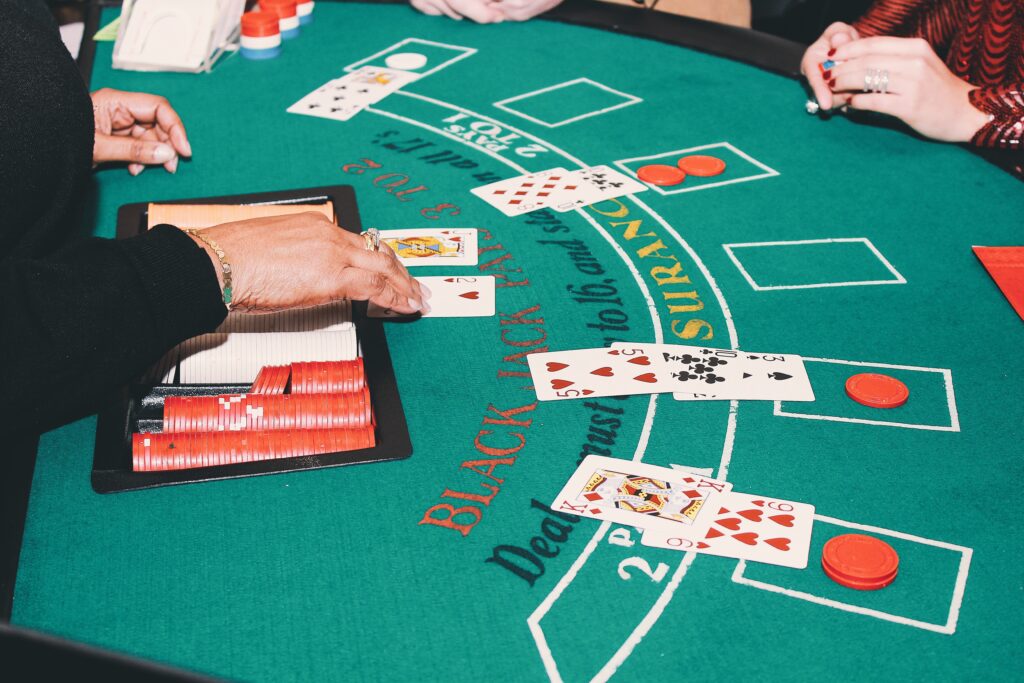
In blackjack, a “hit” means taking an extra card. Both the player and the dealer may do this, but their reasons and options differ.
Players decide whether to take more cards after seeing their first two. Dealers, however, follow set instructions. These rules may seem simple at first, but have subtle consequences for how hands develop.
A quick note on Aces: an Ace may count as 1 or 11. This detail may seem minor initially, but it becomes significant in certain hands like a soft 17, which we will examine later.
How Many Times Can You Hit in Blackjack?
A player may take extra cards one at a time until the hand reaches 21 or exceeds it. There is no fixed numeric limit, though naturally a hand that goes over 21 ends the round for that player.
How often a player might choose to take another card depends on both the total and the dealer’s visible card. With some totals, taking another card could improve the hand or cause it to exceed 21. When a hand contains an Ace, it’s considered a ‘soft’ hand, which provides more flexibility, since the Ace can count as 1 or 11. This flexibility reduces—but does not eliminate—the chance of going over 21.
Some table rules also affect how many additional cards a player may take:
- After a double down, only one more card is given, and the hand then ends.
- After splitting, each new hand may be played normally, receiving additional cards. However, in many casinos, split Aces are restricted to only one additional card each, though rules vary by table.
With the player’s options outlined, it helps to turn attention to the dealer, whose actions follow a different pattern.
How Many Times Can the Dealer Hit in Blackjack?
Just as players have choices, the dealer’s hand develops over several rounds of drawing cards—but in a very different way. Unlike a player, the dealer does not make decisions based on basic strategy or instinct. Instead, the dealer follows a clear set of instructions that dictate when to take an extra card.
Understanding these instructions helps explain why a dealer might draw multiple cards in one round or stop after just one. It also shows how a dealer’s actions can affect the overall flow of a hand if you choose to play.
Rules That Determine How Often the Dealer Can Hit
Dealers do not make choices like players do. They follow a simple principle: keep drawing until reaching at least 17, then stop. Initially, this may seem straightforward, but the total reached may vary depending on the cards dealt.
Because of this, the number of hits a dealer takes may differ from one hand to another. The dealer continues hitting until reaching at least 17. For example, a total of 16 (such as 10–6 or 9–7) must hit, while any total of 17 or higher usually stands. Some casinos require hitting on a soft 17. Dealers do not double down or split, so their actions are limited to drawing or stopping according to the rule.
One small variation changes things slightly: some tables instruct dealers to take a card on a soft 17, while others require them to stop on all 17s. This distinction may not seem crucial at first, but it affects how the hand may develop.
Can the Dealer Keep Hitting on Soft 17?
A soft 17 is any hand totalling 17 that includes an Ace counted as 11, such as Ace-6 or Ace-2-4. The Ace provides flexibility because it can also be counted as 1 if the total would otherwise exceed 21. At some tables, the dealer may take another card on this total; at others, they must stand.
The effect is subtle but important: hitting on a soft 17 gives the dealer more opportunities to improve, whereas standing on all 17s keeps the hand static. Noticing which rule applies may help make sense of why a dealer acts in a particular way and may inform decisions if you choose to play.
How Hitting Affects Your Chances of Winning
Each extra card changes the hand in some way. On low totals, it may improve the hand without much impact. As totals rise, taking another card may become more precarious.
The dealer’s visible card also matters. A lower dealer card often means the dealer might end with a modest total, so a medium player total may be adequate. A higher dealer card usually calls for a stronger total from the player. This approach is based on probability rather than guessing.
No approach guarantees a win. Blackjack outcomes are inherently uncertain, and the house edge exists as part of the game. It’s essential to keep this in mind if you choose to play.
Always keep responsible gambling practices in mind and never wager more than you are willing to lose. If choosing to gamble begins to affect well-being or finances, independent organisations such as GamCare and GambleAware offer free, confidential support.
Play Blackjack Online at O’Reels
If you want to try blackjack online, we at O’Reels offer both live dealer tables and Random Number Generator (RNG) versions, so you can pick the pace and style that suits you. Our site is licensed and regulated by the UK Gambling Commission (UKGC), and you’ll find tools to set deposit limits, take breaks, and monitor your activity.
Our support team is available if you need guidance with your account or the responsible gambling features.
If you’re interested in playing blackjack at O’Reels, feel free to make an account with us, deposit some funds to play with and explore the range of games we have available at your own pace.
**The information provided in this blog is intended for educational purposes and should not be construed as betting advice or a guarantee of success. Always gamble responsibly.