
Blackjack Points & Hand Values: Full Card Guide
If you are curious about how blackjack really works, understanding the cards and their points is a good place to start. Whether you have spotted a game online or at a local casino, knowing how to add up your hand might be helpful before taking part.
In this guide, you will find a clear explanation of how each card is valued, with straightforward examples for new players and anyone refreshing the basics. Read on to learn more.
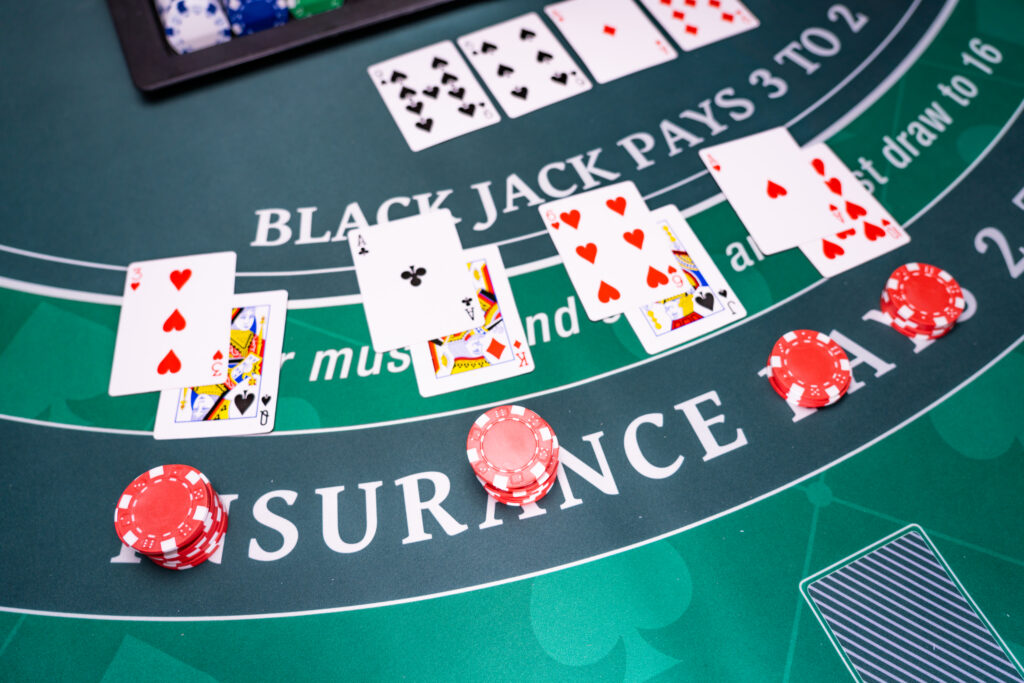
Understanding How Blackjack Hand Values Work
In blackjack, every hand is the sum of its cards. The aim is to finish as close to 21 as possible without going over. If a hand goes beyond 21, it is called a bust and the round is lost.
Number cards from 2 to 10 are counted at face value. Face cards, which are Kings, Queens and Jacks, each count as 10. The Ace is the only card with two possible values, either 1 or 11, depending on what keeps the hand within 21.
Online and in-person games may use different numbers of decks or slightly different rules. Those variations do not change card values, but they can affect how the game plays.
Players should always remember to gamble responsibly and within their means- never wager more than you can afford to lose.
What Are The Point Values Of Each Card In Blackjack?
Every card in a standard 52-card deck has a fixed value used to total your hand.
- Cards showing 2 to 10 are worth the number on the card.
- Jacks, Queens and Kings are all worth 10 points each.
- Aces can be worth 1 or 11, whichever gives the stronger total without going over 21.
For example, a 4 and a 9 add to 13. A Queen and a 10 add to 20. An Ace with a card worth 10 makes 21 with the first two cards, often called a blackjack.
How Do You Calculate The Value Of Your Hand?
A hand’s total is simply the sum of the cards you hold, with the Ace switching between 1 and 11 when it helps the total stay at 21 or under.
Consider a few common situations:
- A 6 and an 8 total 14.
- A King and a 5 total 15.
- An Ace with a 7 can be 8 or 18. If you draw another 5, the Ace shifts to 1 and the hand becomes 13.
Hands can include more than two cards, and Aces may appear together. With two Aces, the hand initially counts as 12, since one Ace is 11 and the other becomes 1 to avoid a bust. If another card is drawn, the values can adjust again so the total stays as strong as possible without exceeding 21.
Many online tables display your current total on screen. At a live table, players typically keep track themselves, which is relatively straightforward once the values are familiar.
What Is An Ace Worth In Blackjack?
The Ace is the most flexible card in blackjack because it can count as 1 or 11. Its value switches based on what keeps the hand strong yet safe from going over 21.
An Ace with a 9 can be 10 or 20. An Ace with any 10-point card creates a starting total of 21 with the first two cards, known as a blackjack. If the hand grows and counting the Ace as 11 would push the total over 21, the Ace automatically drops to 1.
When Does An Ace Count As 1 Or 11?
An Ace counts as 11 when that keeps the total at 21 or below. If 11 would take the hand over 21, it counts as 1 instead. The value can change as more cards are added.
Take an Ace, a 7 and a 5. Counting the Ace as 11 would total 23, so it becomes 1 and the hand is 13. With two Aces and a 9, one Ace is 11 and the other is 1, giving 21. If another small card arrives later, the Ace values can adjust again to keep the total within range.
This ability to switch values is what separates soft hands from hard hands.
How Are Face Cards Valued In Blackjack?
Face cards include the King, Queen and Jack, and they each count as 10. Suits do not matter and there is no difference in value between them.
Because there are many 10-point cards in the deck, totals like 20 are common. This is one reason why the Ace pairs so well with a 10-point card, and why hands often aim for totals that lean on 10s and face cards without going over 21.
Difference Between A Soft Hand And A Hard Hand
A soft hand is any hand that includes an Ace counted as 11. For example, Ace and 5 is a soft 16. If the hand grows and 11 would cause a bust, the Ace can drop to 1, which keeps options open as more cards arrive.
A hard hand is a hand with no Ace, or where any Ace present is already counting as 1. A 10 and a 7 is a hard 17. Unlike a soft hand, there is no built-in flexibility to adjust the total by changing an Ace’s value.
Play Blackjack Online at O’Reels Casino
If you want to explore blackjack online, O’Reels Casino offers a range of classic and modern tables, including versions with different numbers of decks and side features. Each game comes with clear rules, so you can see how that version works before joining a table.
All games are regularly tested by independent agencies, and the site is licensed and regulated by the UK Gambling Commission (UKGC). You will find straightforward menus, on-screen hand totals, and help pages that explain each game in plain language.
If you are ready to get started, join O’Reels Casino and choose a blackjack table that suits your style. With the card values clear and the rules easy to find, you can focus on the game and enjoy a consistent and secure experience.
**The information provided in this blog is intended for educational purposes and should not be construed as betting advice or a guarantee of success. Always gamble responsibly.
*All values (Bet Levels, Maximum Wins etc.) mentioned in relation to these games are subject to change at any time. Game features mentioned may not be available in some jurisdictions.