
Lottery Prediction Algorithm: Can You Really Predict Lottery Numbers?
Every week, millions of people buy lottery tickets, hoping their chosen numbers will be the winning combination. It’s no surprise, then, that lottery prediction algorithms and number-picking systems continue to attract attention from players looking for a different approach.
From websites and mobile apps to statistical tools and AI-powered generators, there are plenty of methods that claim to help players choose their lottery numbers. But what exactly are these algorithms, how do they work, and what should you know before relying on one?
In this guide, we’ll explore the different types of lottery prediction algorithms, how they’re used, and the role they play in choosing lottery numbers.
Read on to learn more.
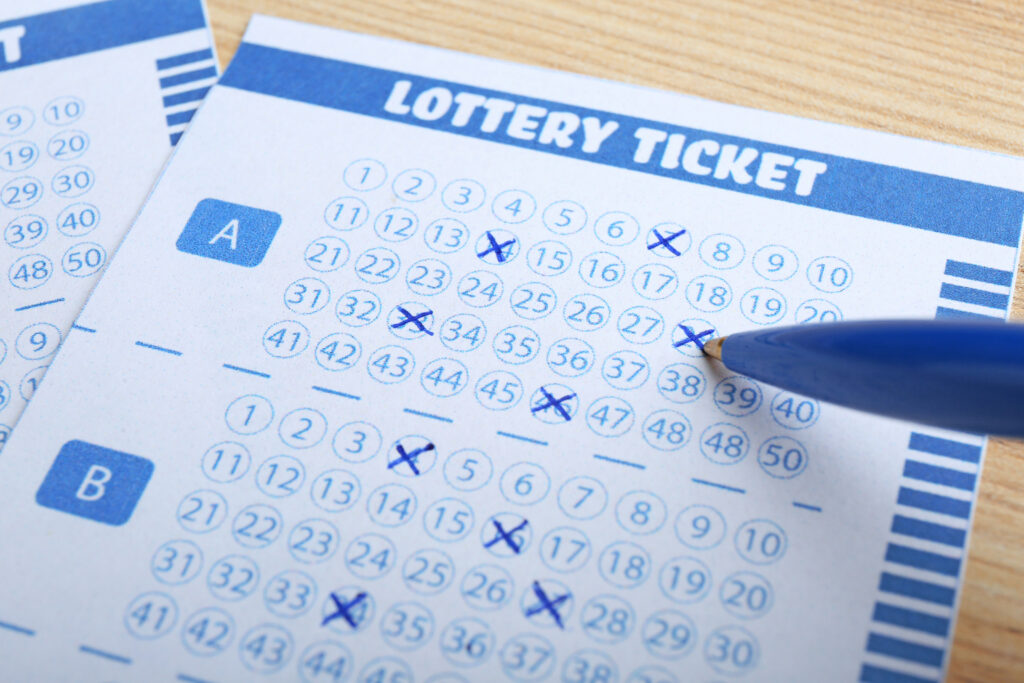
What Is A Lottery Prediction Algorithm?
A lottery prediction algorithm is a computer programme or formula that claims to identify which numbers are most likely to be drawn in a future lottery. You may also see them referred to as “hot and cold number” tools, trend analysers, or AI pickers.
These systems typically analyse previous draws, looking at which numbers have appeared most or least often, and searching for patterns or trends. Some add layers of maths, probability, or artificial intelligence to suggest combinations they favour, but they are still only organising past results rather than accessing any information about future draws.
The idea is that by studying past results, you might be able to make choices that feel more informed than random selection. In practice, properly run lotteries are designed so that every draw is independent and random, with fixed odds that do not change based on previous outcomes. Past results do not influence what happens next, which makes genuine prediction extremely unlikely and means no system can increase your chances or expected returns.
Under UK regulations, marketing must not suggest that skill, experience, or a particular system can guarantee success. If you choose to play, consider these tools as entertainment only, set a budget you can afford to lose, and remember that a random selection is as valid as any algorithm-generated pick.
To see why that is, it helps to know how the numbers are produced in the first place, whether by independently tested random number generators or mechanical ball machines operated under strict procedures and oversight.
How Are Physical And Online Lottery Draws Generated?
Physical lottery draws use mechanical machines with numbered balls. The balls are kept to strict weight and size tolerances, then mixed thoroughly using air jets or spinning arms to minimise any bias before being selected at random as they exit the machine.
These machines are stored securely, sealed, and checked before and after each draw. Draws are typically conducted under the supervision of independent adjudicators, with procedures documented to ensure the process cannot be interfered with and that every ball has an equal chance of being chosen.
For online lotteries, the process is digital. Instead of balls, operators use a Random Number Generator (RNG), a type of software built to produce unpredictable results each time. Modern systems use cryptographically secure methods and carefully managed sources of entropy so that numbers cannot be predicted or replicated.
The RNG runs on certified hardware and software, with access controls and audit trails to prevent tampering. Player inputs do not influence the outcome, and the draw event is logged so it can be reviewed by compliance teams and, where required, by independent auditors.
Both methods are rigorously tested and monitored to make sure nothing can influence the outcome. Licensed operators must meet the UK Gambling Commission’s technical standards, and their draw systems are subject to ongoing oversight, including independent testing against recognised randomness criteria.
In practice, this means regular integrity checks, version control for software, and transparent procedures for investigating and resolving any anomalies. Some providers also make draw procedures publicly available to increase confidence in how results are generated.
With the mechanics in place, the next question is whether past results can tell you anything useful about the future. As draws are intended to be independent events with equal probabilities each time, patterns in previous outcomes should not provide a reliable advantage—something we address in more detail next.
Can Past Results Improve Your Chances Of Predicting Numbers?
Many players believe that a number that has not appeared for a while is “due” to come up, or that frequently drawn numbers are somehow better choices. This is a well-known misunderstanding of how independent events work and is often called the gambler’s fallacy.
In a properly run lottery, each draw stands alone. The system has no memory of previous outcomes, and past results do not influence future selections. Whether a number was drawn last week or has not appeared for months, its probability of being selected next time remains exactly the same.
Modern lotteries use mechanical draw machines or certified random number generators that are independently tested. These processes are designed to ensure fairness and randomness, so patterns seen in historic draws are coincidental rather than predictive.
Think of flipping a fair coin. Even after ten heads in a row, the chance of heads on the next flip is still the same as tails. Lotteries operate on the same principle of independence, so tracking old results cannot change the odds for the next draw.
Reviewing past results may be interesting from an entertainment perspective, but it should not be relied upon to select numbers or to improve your chances. No system, strategy, or pattern can guarantee a win in a game of chance.
Please play responsibly. Set limits, never stake more than you can afford to lose, and remember that lottery outcomes are entirely random and cannot be predicted.
Do Lottery Prediction Apps Or Software Work?
Lottery prediction apps and software are common, often promising to highlight “hot” picks or boost your chances. They can be entertaining to use and may offer new ways to choose numbers, such as visualising past results or generating patterns you would not normally consider.
However, no matter how advanced an app appears, it cannot predict the outcome of a genuine random draw. Licensed lotteries use strict, independently tested processes so that results are unpredictable and independent each time. Whether numbers are drawn by mechanical machines or certified random number generators, the outcome is not something an app can foresee or influence.
Used simply as a tool for picking numbers in a different way, these programmes can be harmless enough. Just keep expectations realistic: they do not improve the underlying odds, and a computer-picked line has the same chance as a quick pick or your own selection. Do not spend more than you planned because an app suggests a “better” line.
If you are wondering where these apps get their ideas, many are built on familiar statistical approaches. These can include frequency charts, “hot” and “cold” number lists, or wheeling systems. Remember, though, that past results do not affect future draws, and patterns seen in history do not create an advantage.
Be cautious of any product that claims guaranteed wins, special access, or materially improved chances. Treat such tools as entertainment only, check any costs or subscriptions carefully, and avoid sharing sensitive personal or payment information unless you are confident it is safe and necessary.
Lottery play should be fun, not a way to make money. Set a budget, stick to it, and never chase losses. If playing stops being enjoyable or you feel concerned about your behaviour, consider taking a break and seeking support. You must be over 18 to gamble, and the odds of winning remain the same regardless of the app you use.
Common Statistical Approaches Used To Predict Numbers
Plenty of players turn to statistics in search of an edge. Popular methods include tracking “hot” numbers that appear often and “cold” numbers that have not shown up for a while. Some rely on frequency analysis, tallying how many times each number has been drawn over long periods. Others choose patterns that make a pleasing line or shape on the ticket.
It’s important to understand that these are selection preferences rather than predictive tools. In properly run lotteries, each draw is independent, and every eligible number has the same chance of appearing in every draw, regardless of recent results.
Another approach is number wheeling, where multiple tickets are bought to cover different combinations. While this increases coverage, it also increases cost, and it does not alter the probability of any single combination being drawn.
Buying more lines simply gives you more entries in proportion to what you spend; it does not improve the odds of any particular line, nor does it influence the outcome of a random draw. Expected returns per pound remain the same, so set a clear budget before playing and avoid spending more to “catch up”.
These techniques can make choosing numbers feel more structured, but they do not change how a random draw behaves. Past results do not predict future outcomes, and no system can guarantee success or overcome the fixed odds of the game.
For transparency and safer play, consider the official odds published by the operator, play for entertainment only, and never chase losses. If you find it difficult to stay within limits, seek support and take a break.
Mathematical Limits: Why True Prediction Is Impossible
Lotteries are built on probability. In a truly random draw, each available number has an equal chance of being selected on every occasion, regardless of what happened before. In regulated games, draws are designed and tested to be random, with independent checks in place to ensure fairness.
Because each draw is independent, no pattern in past results provides information that would let someone forecast the next outcome. Seeing a number appear often, or not at all, does not make it more or less likely next time. This is the gambler’s fallacy: assuming past sequences change the odds of a future, unrelated event.
This independence is the key constraint. Whether you apply frequency tables, machine learning models, or elaborate number systems, you are still attempting to forecast an event that provides no usable signal from its history.
Algorithms can only learn from patterns that persist. Without a genuine signal, there is nothing robust for a model to extract that will reliably translate into correct future picks, and any apparent success is down to chance rather than skill.
That is why, despite confident claims, true prediction remains out of reach. No system can guarantee improved odds beyond random selection, and results will always be uncertain.
Play should therefore be approached as chance-based entertainment, not a way to make money. Set limits, never chase losses, and only participate if it’s affordable and legal for you to do so.
How To Backtest A Lottery Prediction Algorithm?
Backtesting is a way to check how an algorithm would have performed by comparing its outputs to historical draws. The cleanest approach mirrors real time: the model only uses information that would have been available before each past draw, then its suggested numbers are compared with what actually happened.
To make this realistic, use a walk‑forward or rolling evaluation so that training only ever precedes the draw being “predicted”. Keep the simulation faithful to how tickets are actually entered (for example, the number of lines, draw dates, and selection constraints), and always benchmark against the pure‑chance baseline for that game.
Two pitfalls tend to skew results. The first is lookahead bias, where future data inadvertently leaks into the model and makes it appear more accurate than it could ever be in practice. The second is overfitting, where an algorithm becomes finely tuned to quirks in past data that will not repeat.
Related issues include data snooping (repeatedly testing and selecting the best‑looking variant on the same history), and leakage during feature engineering (for example, using rolling windows that accidentally include the target draw). Because lottery draws are a time series, avoid shuffling data or using cross‑validation techniques that break chronology.
Even with careful testing, a model that seems impressive on paper will almost always regress to the baseline when faced with genuinely random future draws. Lottery outcomes are games of chance; no system can guarantee, or materially improve, your odds, and the expected return is negative once entry costs are considered.
Backtesting can still be interesting as a learning exercise, but it should not be taken as evidence that predictions will hold. Treat any metrics as descriptive only, report confidence intervals where possible, and be transparent about methods and assumptions. Do not rely on such results to make financial decisions or to justify increased play.
If you do participate in lottery games, set personal limits, never stake more than you can afford to lose, and remember that past performance is not a reliable indicator of future results.
With prediction off the table, algorithms still have roles that are genuinely useful.
They can help illustrate probability concepts, simulate different game structures, keep orderly records of tickets and outcomes, and compare observed hit rates to chance for educational purposes. Tools that support budgeting and reminders can also help players stay within their own limits, without encouraging increased frequency or spend.
Legitimate Uses For Prediction Algorithms In Lotteries
Algorithms cannot forecast winning numbers or increase anyone’s chance of a prize. Licensed operators treat lottery outcomes as random events, and systems are designed and tested to uphold that principle.
Behind the scenes, analytical tools help keep lotteries robust. Operators monitor draw data in real time to flag unusual patterns that could point to technical faults, equipment wear, data-transfer errors, or attempted interference, allowing swift investigation and remediation.
Independent audits and statistical checks further support integrity. Accredited testing bodies assess random number generators or mechanical draw machines, validate procedures, and confirm that results fall within expected statistical ranges over time. Regular reports and compliance reviews help demonstrate fairness under regulatory requirements.
For players, simple tools can streamline practical tasks. Automated checkers compare ticket entries with past results, and random number generators can help select numbers without personal bias or superstitions. These tools are for convenience only and do not improve the underlying odds of winning.
Researchers also analyse large datasets from historical draws to study probability, randomness, and methodology in a controlled setting. Such work deepens understanding of statistical behaviour and system design, rather than providing a way to predict or influence future outcomes.
In short, algorithms contribute to security, operational resilience, and academic research. They do not confer an advantage over the draw itself. Lottery participation should be for entertainment, outcomes are random, and you should never spend more than you can afford. You must be of legal age to play in your jurisdiction.
Legal And Ethical Risks Around Prediction And Manipulation
Trying to manipulate lottery results is illegal in the UK and is strictly enforced by the UK Gambling Commission and other authorities. Any attempt to interfere with a draw breaches gambling law and licence conditions designed to protect fairness and consumer confidence.
Interference includes tampering with draw equipment, hacking or attempting unauthorised access to systems, collusion, or using insider information that is not publicly available. Such conduct may amount to fraud, computer misuse, or money laundering offences, leading to criminal charges, substantial fines, imprisonment, and possible confiscation of any proceeds.
There are ethical issues too. Manipulation harms other participants by undermining a level playing field and damages trust in the system. It can also reduce the funds directed to good causes supported by lotteries, and risks reputational harm to operators, retailers, and community programmes that rely on these contributions.
Software or services that claim guaranteed wins, secret patterns, or certain predictions are typically misleading and often sit close to scams. They can result in financial loss, exposure to malware, theft of personal data, or misuse of bank and identity details. Using such tools may also breach platform terms and conditions, leading to account closure.
The safest approach is straightforward: treat play as entertainment, recognise that outcomes are random, and avoid anything that promises certainty or attempts to influence results. Use only licensed, legitimate services, keep your devices and accounts secure, and report suspicious offers or behaviour to the operator or relevant authorities.
Always gamble responsibly: set limits, never chase losses, and only participate if you are 18 or over. If you are concerned about your gambling, consider self-exclusion tools and seek support from appropriate advice services.
Practical Player Takeaways: What To Expect From Algorithms
If you try a lottery prediction algorithm, treat it purely as a way to pick numbers, not as a method for improving your chances. It can add a bit of novelty or save time, but it cannot alter the outcome of a random draw.
Think of these tools as convenience features. They may help you make a selection quickly or avoid choosing the same numbers each time, but they do not uncover patterns that shift the odds. In a properly run lottery, every valid combination is equally likely.
Keep your approach simple and measured. Play for entertainment, set a clear budget and time limits, and never chase losses. If it stops being fun or affordable, take a break or stop.
Remember that returns are not guaranteed and outcomes are uncertain. Only play if you are 18+ and check the rules and terms of the operator you use so you understand how the game works and what it costs.
When the dust settles, the maths is straightforward: lottery draws are independent and unpredictable. Past results do not predict future ones, and no app, system, or strategy can reliably tell you the next winning line.
Whether you use quick picks, an algorithm, or your own numbers, treat the result as pure chance and spend only what you can afford to lose.
**The information provided in this blog is intended for educational purposes and should not be construed as betting advice or a guarantee of success. Always gamble responsibly.