
Most Common Roulette Patterns and Predicting Roulette Explained
If you’ve ever watched a roulette wheel spin and wondered whether there’s a way to spot winning patterns, you’re not alone. Many players look for clues that might tilt the odds in their favour.
Patterns and prediction ideas have fascinated players for generations. They make the game feel more engaging, especially when the results board looks like it is pointing in a certain direction.
So, can you really forecast what comes next, or is it simply part of the theatre of roulette? This guide walks through the most talked-about patterns and explores what they do, and do not, tell you.
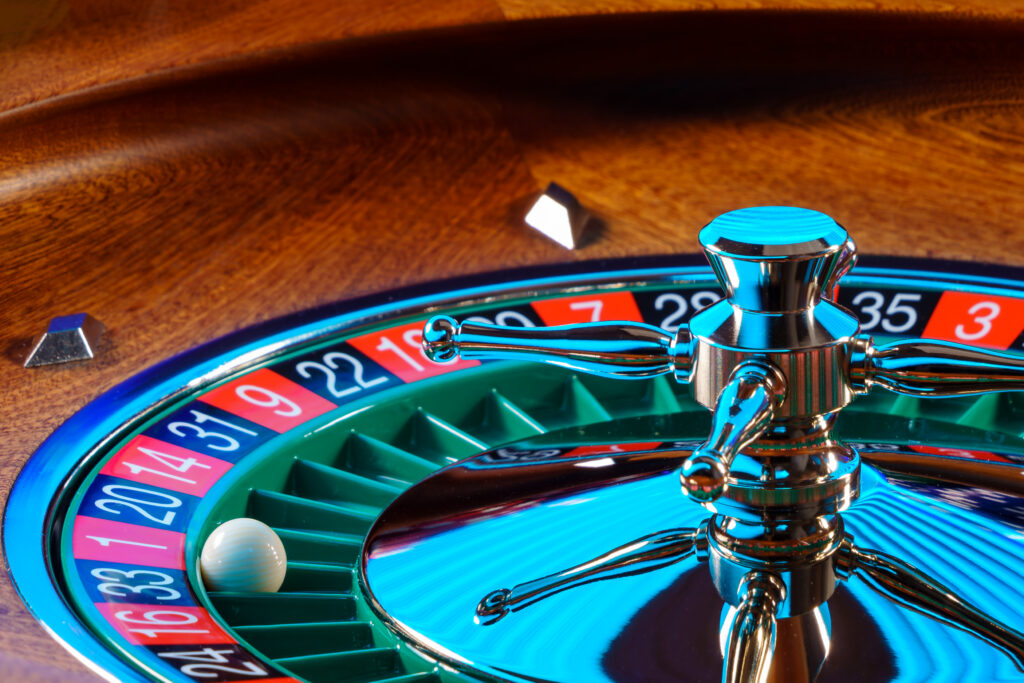
What Are The Most Common Roulette Patterns?
When people play roulette, they often notice certain patterns popping up on the results board. These can seem persuasive, as if the wheel is due to land on a certain number or colour, but this can reflect common cognitive biases rather than any real trend.
One of the most common patterns is the red or black streak. This is when you see a run of the same colour, such as five reds in a row. Many players feel tempted to switch sides, believing the streak cannot continue. In reality, each spin is independent, and the chance of red or black on a European wheel remains the same on every spin, with the green zero creating the house edge.
Another popular pattern is a number repeat. This is when the same number appears in close succession. Players sometimes chase these, thinking that particular numbers are hot. While repeats do occur, they arise by chance, and past results do not influence future outcomes.
There is also the pattern of odd and even results. After several odd results in a row, it is easy to assume even numbers must be next. This is a classic example of the gambler’s fallacy; long runs can happen in random sequences, and no result is “due”.
Finally, players often look for sector patterns, where results cluster in the same area of the wheel. Some will back nearby numbers, hoping the same section lands again. In licensed venues and regulated online games, wheels and RNGs are tested so that outcomes are random, making apparent clusters a normal feature of randomness rather than a reliable signal.
Noticing patterns can be interesting, but they are not a shortcut to beating the game. They should not be used as a prediction tool, and no betting system can remove the house edge. Treat these patterns as part of the entertainment, set limits, and never chase losses.
That raises the obvious question: can such patterns actually help predict the next spin? Under fair, regulated conditions, the answer is no—past results are not a reliable indicator of future performance.
Can Patterns Help Predict The Next Spin?
It is tempting to think that spotting a pattern, like several reds in a row or the same number appearing twice, means you can predict what will happen next. In reality, every spin is independent, and apparent streaks are a normal part of random results.
The wheel has no memory. The outcome of each spin does not depend on what happened before, no matter how many times you see the same result. Ten reds in a row does not make black “due”, and a recent number is no more likely to land again than any other.
Roulette outcomes are generated by chance, whether you are playing at a real table or online. Physical wheels rely on physics and randomness, while online games use a certified random number generator (RNG) to produce outcomes. There is no hidden sequence to crack, and patterns in previous spins do not influence future results.
Licensed games are designed with a built-in house edge and an advertised RTP that describe long‑term performance across many spins. These figures do not predict what will happen in your session, and no staking system or pattern‑tracking approach can change the underlying odds.
So while following patterns may add some personal structure to how you play, they cannot tell you what will actually happen next. Treat roulette as entertainment, not a way to guarantee a win, and never chase losses based on a perceived trend.
As for why patterns appear so often in the first place, that comes down to how people interpret randomness. Clusters and streaks naturally occur, and our brains are quick to notice coincidences while overlooking the many ordinary outcomes in between.
If you choose to play, set a budget and time limit in advance, and only gamble with money you can afford to lose. Take breaks, use safer gambling tools where available, and stop if it is no longer fun.
Why Do Patterns Appear On A Roulette Wheel?
Patterns often stand out on a roulette wheel because random results naturally bunch together. Clusters, streaks and runs are a normal feature of randomness, not a sign of influence or control. Our brains are wired to spot order in noise, so seeing a string of reds, long gaps between certain numbers, or several high numbers in a row can feel meaningful, even when nothing unusual is happening.
In reality, it is randomness at work. Each spin is independent and does not remember what happened before, whether you are playing on a physical wheel or through a regulated Random Number Generator online. The probability on the next spin remains the same, and it is not altered by your stake size, timing, or previous outcomes.
Because there is no design behind the sequence, any pattern you notice is a coincidence. Over time, results will fluctuate around the expected probabilities, but the short term can look very uneven. The presence of the zero (or zeros) also means the house has an edge, which is not offset by any betting pattern.
People also tend to expect short‑term results to reflect long‑term probabilities. This is known as the gambler’s fallacy. For example, if black has not landed for a while, some assume it is now more likely. It is not. The odds remain the same on each spin, and long‑term averages do not “correct” short streaks on demand.
Other common thinking traps include selective memory (remembering the times a “pattern” seemed to work and forgetting the rest) and confirmation bias (seeking results that fit a belief). Ideas such as dealer “signatures” or wheel “bias” are not reliable in a properly maintained, regulated environment, and you should not rely on them.
These patterns can be enjoyed as part of the theatre of the game, but they are not signals to act upon with confidence. Roulette is a game of chance, and no staking system or observation can guarantee a profit.
If you choose to play, treat it as entertainment. Set a budget and time limit, do not chase losses, and stop if it is no longer enjoyable. Only risk what you can afford to lose, and seek support if gambling is having a negative impact.
Wheel Bias And Physical Defects Explained
Sometimes, older or poorly maintained roulette wheels can develop what is called a wheel bias. In simple terms, certain numbers or sections may appear more often than probability suggests over a very large number of spins.
It is important to note that short-term streaks do happen naturally. Apparent patterns over a handful of spins are usually variance, not evidence of a true, exploitable bias.
Wheel bias can arise from subtle physical defects, such as tiny dents, worn or misshapen pockets, a slightly unbalanced rotor, or a small tilt in the wheel head. Even dust build-up or minor manufacturing variances can nudge the ball along particular paths if, for example, one pocket is fractionally shallower than its neighbours.
Identifying a genuine bias typically requires extensive recorded results and careful statistical analysis. Casual observation is rarely reliable, and confirmation bias can make normal randomness look meaningful.
Casinos work to prevent bias by routinely checking and maintaining equipment. This includes cleaning, levelling, replacing worn components, and rotating or retiring wheels that do not meet standards.
In modern, regulated environments—especially in the UK—operators follow strict technical and compliance procedures. Regular inspections, quality controls, and oversight from independent testing providers make wheel bias extremely rare.
Stories of players spotting a bias and capitalising on it largely come from an era of older hardware and slower maintenance cycles. On well-run wheels today, each spin is intended to be random, and any perceived pattern should be treated with caution.
For online play, fairness is delivered through certified Random Number Generators (RNGs) for digital roulette and rigorous procedures for live dealer tables. Equipment is monitored, wheels are maintained and rotated, and outcomes are tested against regulatory standards.
UK-licensed operators are required to have their games independently tested and audited. RTP information is made available, and results are produced in line with UKGC technical standards to keep games fair and transparent.
No betting system can guarantee success, and past results do not predict future outcomes. Always set limits, play for entertainment, and only wager what you can afford to lose.
Online RNG Versus Live Wheel Behaviour
When playing roulette online, there are two main formats: games powered by a Random Number Generator, and live dealer games using a real wheel in a studio. Both are offered by licensed operators and follow published rules.
RNG roulette uses certified software to determine the outcome of each spin. The result is generated after bets are accepted and is not affected by stake size, timing, or previous results.
The software is tested against strict statistical standards to ensure unpredictability, similar in spirit to tossing a fair coin. Independent testing bodies audit these games regularly to confirm that each spin is fair and that the stated return to player and house edge are accurate.
Live roulette uses a physical wheel and ball, streamed to your device in real time. The outcome is decided by the movement of the ball and wheel, as in a traditional venue, and may be dealt by a trained dealer or an automated wheel.
Studios maintain and monitor equipment to high standards, with procedures in place to ensure game integrity and continuity. Games are overseen for quality and fairness under applicable licensing conditions.
Whichever version you choose, every spin is independent and unpredictable. Past results do not influence future outcomes, and any streaks or patterns you notice are normal variance rather than a signal you can act on.
No strategy or betting system can change the odds of the game. Only wager what you can afford to lose, and consider setting limits to help you play responsibly.
Can Spin History Be Analysed For Patterns?
Many casinos and online tables show recent results. Some players enjoy studying these, hoping to spot a pattern or trend to guide their next wager. These boards, charts, or “hot/cold” displays are there for transparency and interest, not as betting advice or a guide to future outcomes.
While it is natural to look for streaks or repeats, analysing spin history does not give you an advantage. Each spin is independent, and the wheel or approved random number generator does not take previous results into account. The underlying probabilities stay the same on every spin, and the house edge does not change. No staking system or pattern-spotting approach can reliably overcome that.
Checking past outcomes can be interesting and a talking point with friends, but it does not make the future more predictable. Beware the gambler’s fallacy: a recent run of reds does not make black “due”, and a repeat does not become “more likely”. Avoid chasing losses or increasing stakes based on perceived trends, as this can lead to harm rather than control.
If you still enjoy tracking what you see, a little statistical context can help you interpret it calmly. Small samples are noisy, and streaks happen by chance, even in fair games independently tested for randomness, with RTP information published by licensed operators. Set time and spend limits, play for entertainment, and stop if it stops being fun. Only gamble if you are 18+ and consider support options if you feel your play is getting out of control.
Statistical Basics For Spotting Patterns
How To Calculate Frequency, Streaks And Hot/Cold Numbers
If you are curious about roulette patterns, it helps to understand a few simple ideas: frequency, streaks, and hot or cold numbers. These concepts can make observation more engaging, but they should be treated as descriptive only, not as tools for predicting or improving results.
Frequency describes how often a particular outcome appears during a period you are observing. For example, if red has landed 7 times in 20 spins, its frequency in that sample is 7. You can also express this as a proportion or percentage (7/20, or 35%).
Remember that small samples can swing widely, and clusters are normal in random sequences. Over time, results may appear to balance out, but each spin is independent and the house edge is unchanged. Tracking frequency does not increase your chances.
A streak is when the same outcome repeats several times in a row, such as getting five even results on the trot. Some players tally these runs to see how often they occur. However, the probability on the next spin remains the same regardless of what just happened, so a streak does not make the opposite outcome “due”.
Hot numbers are those that have appeared more often than others in your recent sample, while cold numbers are those that have not come up for a while. Casino displays often highlight these automatically to summarise past results.
It is important to view hot/cold information as a record of what has already happened, not as a forecast. Past outcomes do not predict future spins, and using these displays should not be relied upon to influence betting decisions.
Keeping informal notes can make tracking more engaging, but it does not change the underlying odds or return to player. Treat any patterns you spot as interesting snapshots rather than signals to increase stakes or chase losses. Set limits, play for entertainment, and stop if it stops being fun.
Common Pattern Myths Debunked
Roulette comes with plenty of myths about patterns and predictions. It is easy to spot streaks after the fact and assume you can foresee the next result, but that is hindsight bias at work.
Here are the big ones to avoid, and why they do not stand up to scrutiny.
One common belief is that the wheel owes you a certain outcome. This is the gambler’s fallacy. Just because black has not landed for a while does not make it more likely next time.
Each spin is an independent event, with the same probabilities regardless of what came before. Streaks and clusters do occur by chance and are not signals you can reliably use to predict the next number or colour.
Another claim is that hot numbers are more favourable than others, or that a run of reds must end soon. In truth, all numbers and colours have the same chance on every spin.
Display boards and recent results can be interesting, but they are descriptive, not predictive. Treat them as information about the past, not a guide to what will happen next.
Some people believe systems like the Martingale can beat the wheel in the long run. While these can produce short periods of wins, the underlying probabilities do not change, and betting strategies cannot alter the built‑in house edge.
Progressions increase exposure to variance, and table limits and bankroll constraints mean a losing run can grow costly quickly. No staking plan can guarantee a profit or remove risk.
Finally, do not rely on tales of special wheels or superstitions. Reputable casinos and UK‑licensed online sites use controls, independent testing, and routine maintenance to keep the game fair.
Online games use certified RNGs, and physical wheels are checked and calibrated. If you ever suspect a fault, pause play and contact support or a member of staff so it can be investigated.
With those myths out of the way, what practical signs should you watch for if something genuinely seems off? Repeated mechanical irregularities, obvious mispays, or software glitches are red flags—do not try to take advantage of them; report them instead.
Remember: roulette is a game of chance. Play for entertainment, set limits, never chase losses, and only gamble what you can afford to lose.
Simple Checks To Spot Anomalous Wheels Or Tables
While it is highly unlikely you will find a biased or faulty wheel at a licensed casino, it is still useful to know what to look out for. For online games, outcomes are typically determined by independently tested random number generators, and for live dealer tables, equipment is routinely inspected.
Think of these checks as simple, responsible observations for peace of mind rather than a way to gain an advantage. They should not change how you play or the amount you choose to stake.
First, consider whether a particular number or section is appearing far more often than others across a large sample. Aim to observe hundreds of spins before drawing any tentative conclusions, and keep notes if you wish to track outcomes calmly and objectively.
Remember that streaks and clusters occur naturally, even in fair games. Short-term runs can look unusual but are expected due to variance, and they do not imply a reliable pattern you can use to predict future results.
If you can see a live wheel up close, check the general condition. Does it look damaged, tilted, or uneven? Are the pockets uniform in size and depth, and are the frets and ball track in good order without visible warping or excessive wear?
From a distance, you might also observe whether the wheel appears to spin smoothly without wobble and whether the ball behaves consistently when released. None of these observations confirm bias on their own, but obvious physical defects are worth mentioning.
If you notice persistent, unusual results or any visible damage, mention it to staff or customer support. Licensed operators run regular checks and audits to keep games fair, can review logs, and may pause a table to investigate if required.
If you have concerns, consider stepping away until the operator confirms all is in order. It is better to pause than to continue playing when you are unsure.
Patterns can make roulette feel compelling, but they do not provide a way to forecast the next spin. Each spin is independent, and no observation changes the house edge.
Enjoy tracking outcomes if you wish, but keep play centred on fairness, safer gambling tools, and informed expectations. Set time and spend limits, avoid chasing losses, and treat roulette as entertainment rather than a way to make money.
**The information provided in this blog is intended for educational purposes and should not be construed as betting advice or a guarantee of success. Always gamble responsibly.